
Field Trip to Chenonceau: History and Architecture
Chenonceau: The Loire Valley’s Must-See Architectural Masterpiece
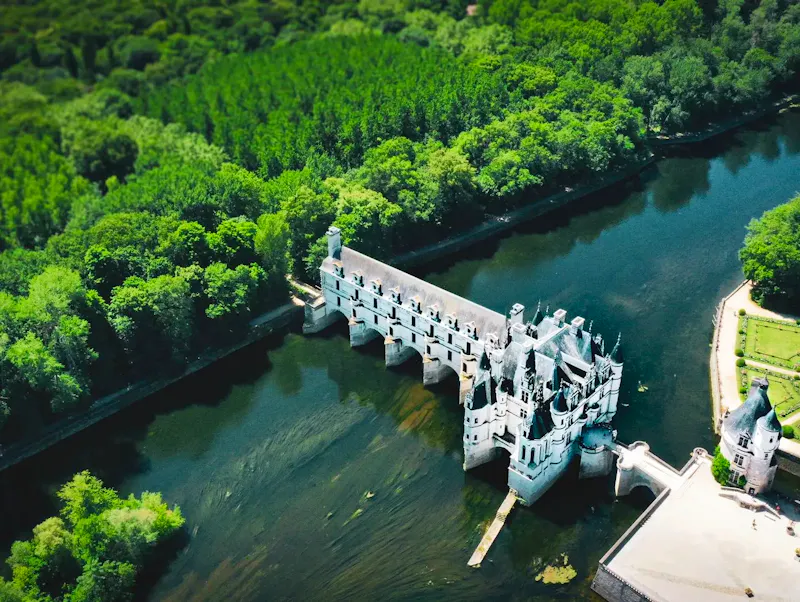
Poetically nicknamed the “Château des Dames,” the Château de Chenonceau is not only the most-visited private monument in France; it is a true gem of world heritage that captivates people of all ages. Its unique and spectacular architecture, with its famous multi-story galleries gracefully spanning the tranquil waters of the Cher River, captures students’ imaginations from the very first moment the château comes into view at the end of the grand, plane-tree-lined avenue.
Including this exceptional monument in the itinerary for your school trip to Touraine is an educational decision of immense value. Far from being a mere tour of old buildings, exploring the Chenonceau estate provides a hands-on way to address a multitude of cross-curricular topics, perfectly aligned with the guidelines of the French Ministry of Education, from the end of Cycle 3 (CM1–CM2) through high school.
French history examined through the fascinating lens of women in power
One of the great educational strengths of a visit to Chenonceau lies in its ability to explore French history from a profoundly innovative and essential perspective: that of the decisive role played by women. Indeed, throughout its history, the château was conceived, built, embellished, protected from the ravages of the Revolution, and restored by extraordinary historical female figures.
As they move through the rooms—richly furnished and adorned with monumental tapestries—students will be invited to follow in the footsteps of these great women:
- Katherine Briçonnet: the brilliant founder, who oversaw the construction of the original main building on the foundations of an old fortified mill.
- Diane de Poitiers: King Henry II’s favorite, who, with a keen sense of business and aesthetics, commissioned the creation of the first grand gardens and the construction of the famous bridge over the Cher River.
- Catherine de’ Medici: the Queen of France and a relentless regent, who, after ousting Diane, had the immense covered galleries built over the bridge, drawing direct inspiration from the famous Ponte Vecchio in her native Florence.
- Louise of Lorraine: the “White Queen,” the inconsolable widow of King Henry III, whose spectacular black chamber (draped in dark velvet and studded with silver teardrops) powerfully illustrates the royal mourning customs of the time.
This biographical and person-centered approach provides a very concrete illustration of the role—often downplayed in textbooks—of women in power within the highly political society of the Renaissance. Today, this is a key and highly valued focus of the new history curricula.
A feat of engineering and botany, and an unexpected crossroads of World War II
While the Renaissance period (16th century) takes center stage at Chenonceau, the estate offers other equally fascinating educational resources for other school subjects:
- Mathematics, Geometry, and Visual Arts: The study of the vast French formal gardens (the Garden of Diana and the Garden of Catherine) provides a fabulous setting for exploring the concepts of axial symmetry, perspective, and the importance of orderly aesthetics in Renaissance art. Furthermore, the incredible technical feat of constructing massive bridge piers directly in a riverbed in the 16th century fascinates technology teachers.
- 20th-Century Contemporary History (9th-Grade and High School Curricula): This historical fact is often overlooked by the general public, but the Grand Gallery at Chenonceau played a strategic and vital role during World War II. Between 1940 and 1942, the Cher River marked the fateful demarcation line. The castle’s main entrance was then located in the “Occupied Zone” (controlled by the Germans), while the south gate of the gallery opened directly onto the “Free Zone.” The castle thus served, right under the occupiers’ noses, as an unexpected clandestine crossing point for the Resistance and for many people fleeing Nazi oppression. This powerful anecdote provides an exceptional hook for capturing teenagers’ attention on the Resistance and contemporary history.
How can you logistically organize your group visit from the Domaine des Acacias?
Chenonceau’s global popularity inevitably leads to very high tourist traffic, especially in the spring and summer. To ensure that a visit with a class of 30 students (or an entire busload of 60 students) takes place in an environment conducive to calm and optimal concentration, logistics and advance planning are essential.
By choosing to house your school group at the Domaine des Acacias, located in La Ville-aux-Dames, you gain a major geographical advantage. You’ll be just about a 30-minute bus ride from the castle.
This highly strategic location allows your drivers to drop off the students in the tourist site’s parking lot as soon as the gates open in the morning (around 9:00 or 9:30 a.m.). This is the secret to a successful visit: you’ll be able to explore the castle’s cramped rooms (such as the magnificent kitchens in the basement) before the massive influx of international tour buses arrives in the afternoon.
After this morning guided tour of the interior, you’ll enjoy lunch in the fresh air. Our packed lunches, prepared that very morning by us at the Domaine des Acacias, will allow you to enjoy a pleasant picnic in the designated covered areas provided by the castle for this purpose, near the coach parking lot. The afternoon can then be leisurely devoted to an outdoor activity: a tour of the 16th-century farm, an orienteering course through the vast wooded park, a fun exploration of the plant maze made up of 2,000 yew trees, or participating in an educational workshop (the castle’s visitor services department offers high-quality educational activity booklets). Once you’ve had a full day, the return trip to your base camp at Les Acacias will be quick, sparing you the exhaustion of long drives at the end of the day.
Voyages Scolaire
Discover also
Voyages Scolaire
Comment financer un voyage scolaire ou une classe de découverte ?
Organiser un séjour éducatif demande un budget. Voici des pistes concrètes pour financer votre sortie scolaire en Val de Loire avec tous vos élèves.Voyages Scolaire
School Meals on Field Trips: Allergies and Balanced Menus
Meal planning is crucial during field trips. Here’s how our school handles full board, packed lunches, and student allergies.Voyages Scolaire
School Accreditations: Choosing the Right Center for Your Field Trip
Hosting minors requires strict standards. Learn about the importance of National Education accreditations for approving your school trip application.Voyages Scolaire
Réussir son séjour d'intégration scolaire en Val de Loire
Renforcez la cohésion de vos élèves dès la rentrée. Découvrez pourquoi notre domaine en Touraine est le lieu idéal pour vos séjours d'intégration scolaire.Voyages Scolaire
A Class Trip to Tours: Heritage, History, and Culture
Include Old Tours in your field trip. A rich journey from the Middle Ages to the present day, just a few minutes from our visitor center.Voyages Scolaire
Futuroscope: Organizing a Science and Technology Field Trip
Take your students to Futuroscope during your stay at the Domaine des Acacias. It’s the perfect park for exploring science in a fun and interactive way.Voyages Scolaire
La Loire à Vélo” for School Groups
Combine sports and environmental exploration with “La Loire à Vélo” for your school field trip. Safe routes and suitable accommodations just outside Tours.Voyages Scolaire
School Field Trip to ZooParc de Beauval: The Educational Guide
The Beauval ZooParc is the perfect educational outing in the Loire Valley to raise your students' awareness of biodiversity during your field trip.Voyages Scolaire
School Trip: Amboise and Clos Lucé—In the Footsteps of Leonardo
Plan your school field trip to Touraine with a visit to Amboise and the Clos Lucé. A journey back to the Renaissance—perfect for the history curriculum.Air-Conditioned Cottages Surrounded by Greenery
Vous cherchez un hôtel en Touraine pour fuir la chaleur ? Découvrez le Domaine des Acacias : nature, ombre et cottages climatisés proches des châteaux.Taverne de la Métairie: Dining and Entertainment in Touraine
Discover La Taverne de la Métairie at the Domaine des Acacias. Traditional cuisine, a festive atmosphere, and entertainment all week long on the banks of the LoCycling Along the Loire in Touraine: A Nature Stop at the Domaine des
Explore the Loire by bike! Stop at the Domaine des Acacias: nature-inspired lodging along the Loire River and the restaurant La Taverne de la Métairie in TouraiTeam-Building Retreat: Boost Your Teams' Cohesion at Domaine des Acaci
Le Domaine des Acacias: A Picturesque Setting for Your Special Events
View more